Mastering Longboard Tricks: Techniques and Insights

Intro
Longboarding, much like its surfboard cousin, is not just a sport; it’s a lifestyle soaked in camaraderie and culture. As one glides down a hill, the wind rushing past, it becomes clear that there’s more to longboarding than simply maintaining balance on a board. The mastery of tricks elevates this sport into an art form, allowing individuals to express creativity while pushing their limits. In this exploration of longboard tricks, we delve into the nuances of technique, the journey from beginner moves to advanced maneuvers, and the vital role gear plays in mastering the art.
Gear and Equipment
Latest Surfboard Technologies
Modern longboarding gear has undergone a significant transformation. With the emergence of new materials and designs, boards today boast lighter weight, enhanced durability, and improved performance. Advanced foam cores, such as those found in brands like Landyachtz and Arbor, have been tailored to enhance flexibility while still offering stability. The integration of carbon fiber adds to the resilience, ensuring the boards can withstand the strains of aggressive trick execution.
It’s not just the boards that have seen advancements; wheels and trucks play a crucial role in the overall riding experience. Selecting a softer wheel, for instance, helps in absorbing shocks during tricks, making them preferable for beginners. On the contrary, harder wheels might be favored by pros looking for speed and grip. Understanding the specific use of each component can make a world of difference in your longboarding journey.
Essential Accessories for Every Surfer
Accessories can greatly enhance both performance and safety. A quality helmet is non-negotiable, safeguarding against potential injuries. Additionally, knee pads and elbow pads provide crucial protection during falls, allowing riders to push their boundaries with confidence. Whispering winds may ruin your vibe while longboarding, but a pair of stylish sunglasses not only protects those peepers but also adds flair to your overall look.
When it comes to maintaining your board, a set of specific tools is vital. Having a skate tool can help ensure that your trucks are tightened just right and that your wheels spin freely. Regular maintenance can prolong the life of your board and enhance your experience.
Surf Techniques and Skills
Beginner Surfing Techniques
Starting off on the right foot—or board—matters immensely. For newcomers, mastering the basics is paramount. Learning to balance under varying speeds and surfaces lays the foundation for more intricate tricks. A practiced push, where you stand still while giving a solid push with one foot, sets the tone. Practicing this in open spaces allows for a sense of freedom without the fear of immediate obstacles.
Once balance is second nature, transitioning to carving can introduce a smooth flow to your ride. Carving, defined as shifting your weight to direct the board, becomes the precursor to more complex tricks, offering a sense of control and connection with the terrain.
Advanced Maneuvers for Experienced Surfers
For those who’ve already dipped their toes into the world of longboarding and are ready to dive deeper, the challenge lies in advanced tricks. Kickflips, slides, and transitions push the boundaries of skill and creativity. Understanding weight distribution becomes essential, as a slight shift can mean the difference between nailing a trick and taking an unexpected tumble.
Intercepting the communication between mind and board helps riders develop their unique style. Not every trick will suit every individual, and experimenting is often the key to finding what feels right. Whether focusing on the fluidity of a slide or the sharpness of a turn, a repertoire of tricks forms a personal expression of one’s longboarding journey.
"Longboarding is a dance, and each trick tells a story."
Connecting back to the cultural significance of these techniques, every maneuver also serves as a reflection of the longboarding community’s spirit. Mastery of these tricks reinforces not just individual skill, but also the bond shared among riders.
In summary, whether you are just starting out or looking to perfect those advanced moves, grasping the right techniques and having the right gear sets the stage for a fulfilling experience on the board. The journey of mastering longboard tricks is as endless as the horizon on a sunlit beach, beckoning you to ride further.
Foreword to Longboard Tricks
Longboard tricks represent more than just flashy displays of skill; they encapsulate the spirit of freedom, creativity, and camaraderie that defines the longboarding community. For surfers, outdoor enthusiasts, and travel bloggers, understanding this realm can elevate not just your riding ability but also your appreciation for this vibrant culture. While it might seem daunting at first glance, mastering these tricks begins with a solid foundation and a dash of patience.
Whether you’re preparing to cruise down a gentle slope or looking to carve out your next big move, knowing the ins and outs of longboard tricks is essential. They foster balance, enhance control, and frequently lead to greater overall enjoyment of the sport. As you delve deeper into the techniques, you'll realize they challenge not only your physical skills but also your mental resilience.
Tricks can be seen as a series of building blocks. Starting with fundamental maneuvers allows riders to progressively advance to more complex feats. This incremental approach helps in minimizing injury risks while promoting a sense of accomplishment with each new skill mastered. Furthermore, each trick has its own nuances and nuances that reflect the personal style of the rider.
Why This Matters
In the world of longboarding, tricks serve as a universal language. They can be a bridge that connects riders across cultures and locations. When you perform a trick, it's a testament to countless hours of practice, understanding of physics, and personal grit. For every exhilarating slide or daring spin, there's a story behind it—be it an afternoon spent perfecting a maneuver at the local park or a spontaneous road trip in search of the perfect hill.
By embracing these tricks, you not only elevate your skillset but also enrich your involvement in the longboarding culture, allowing you to form connections with fellow enthusiasts who share the same passion. The journey into longboarding tricks is more than just pushing your limits; it's about crafting unforgettable memories and experiences that resonate long after the board is put away.
"Longboarding is not just a sport; it's a thrumming pulse of community and expression that rolls through every trick performed."
Key Points:
- Foundation Matters: Start with basics before tackling advanced moves.
- Linking with Community: Tricks create bonds with fellow riders.
- Personal Growth: Each trick presents opportunities for physical and mental expansion.
Longboard tricks are a critical component of what makes this sport so appealing. With this foundational understanding, riders of all levels can embark on a path towards mastery, equipping themselves with the knowledge, techniques, and insights needed to successfully explore and enjoy this exhilarating journey.
Understanding the Basics of Longboarding
Longboarding isn't just a ride; it's a unique blend of art and physics that beckons enthusiasts into its world. By grasping the fundamental concepts of longboarding, riders can elevate their skills while also appreciating the intricate dance between board dynamics and human movement. This section functions as a prelude to more advanced techniques, setting the stage for a transformative journey through the world of longboard tricks.
Choosing the Right Longboard
Different Types of Longboards
Riding styles vary like unique fingerprints, and the choice of longboard reflects that individuality. There are a few main types that cater to distinct preferences.
- Cruisers are perfect for laid-back rides, featuring a wider deck which provides stability that's hard to beat. They're often favored for the straightforward flow they offer on city streets.
- Freeride boards allow for sliding and tricks, with a design that encourages a playful approach to riding. They often have a symmetrical shape, making it easy to switch from a regular to switch stance.
- Downhill boards prioritize speed with a low center of gravity and streamlined shape. They give riders the confidence to lean into corners, letting gravity do its thing.
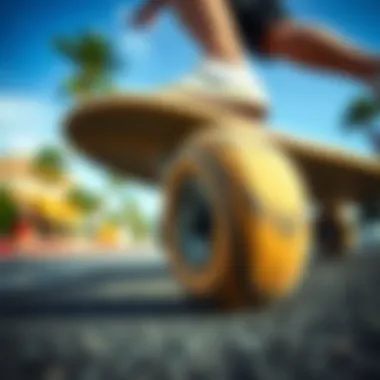
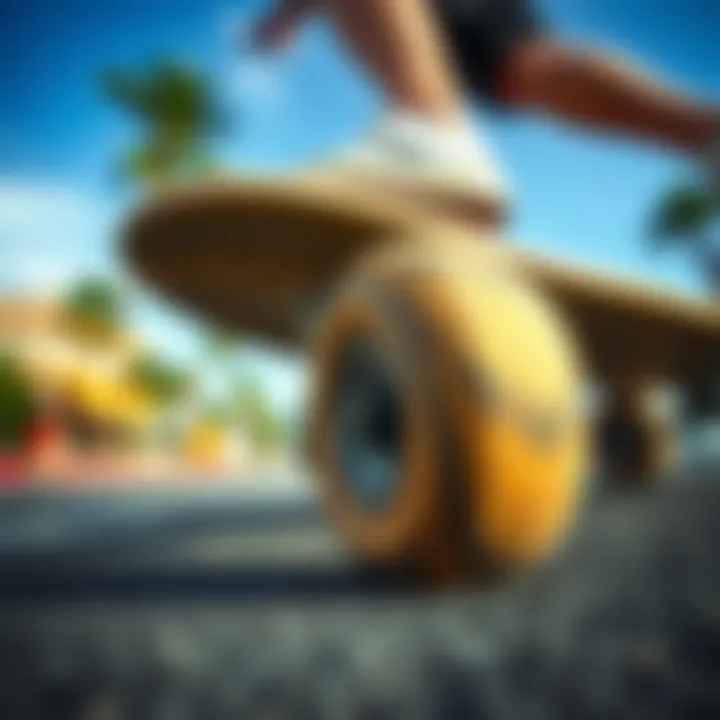
Each style comes with its own set of pros and cons, but understanding these categories can simplify the selection process. For example, if you're adventurous and enjoy a mix of speed and tricks, a freeride board might be your best bet, while a cruiser suits casual jaunts through neighborhoods.
Key Features to Consider
When diving into longboarding, knowing what to look for makes the experience smoother. Key features include board length, width, flex, and material.
- Length can range from 28 to 60 inches, offering speed or maneuverability. Shorter boards are easier to turn but might lack stability at higher speeds.
- Width affects foot placement and comfort; wider boards give more space for different stances, allowing for better control during tricks.
- Flex refers to how rigid the board is, affecting the rider's balance and responsiveness. A stiffer board provides stability, while a flexy board can absorb shocks and promote a smoother ride.
These specifics not only define the feel of riding but also set the foundation for mastering techniques in longboarding, leading to better execution of tricks down the line.
Essential Gear for Performing Tricks
The right gear compliments the skills a rider brings to the board. Having the right equipment makes a world of difference in both safety and performance.
Protective Equipment
Before hitting the pavement, protective gear is crucial. Helmets, knee pads, elbow pads, and wrist guards are standard staples.
- Wearing a helmet not only safeguards your noggin but boosts confidence while trying new tricks. Plus, many places require it for safety regulations, so it’s both smart and necessary.
- Knee and elbow pads can be lifesavers, especially for beginners. They cushion falls and minimize scrapes, making the learning process a bit more forgiving.
Although some pros may forgo this gear for style, the smart choice is to gear up to avoid unnecessary injuries.
Maintenance Gear
Simply owning a longboard isn't enough; maintaining it is the other half of the equation. This is where maintenance gear comes into play.
- Items like skate tool and spare parts. Regular tightening of the trucks and checking wheel conditions ensures the board runs smoothly. A tool designed for longboarding often comes equipped to handle numerous adjustments, giving riders the power to customize on the go.
- Keeping spare wheels or bushings handy also lets riders experiment with different setups quickly.
Understanding maintenance not only prolongs the life of the board but can significantly impact performance during tricks. Riders concerned about their gear's health are better positioned to focus on mastering their tricks without the nagging worry of mechanical failure.
"Taking care of your board is like brushing your teeth—it’s the difference between a clean ride and a toothless grin!"
By exploring these critical foundations in longboarding, riders lay the groundwork for their journey into mastering tricks and enhancing their experiences. Knowing how to choose the right board and ensuring safety through gear choices helps build confidence while learning, making the cycle of practice and progression far more enjoyable.
Fundamental Tricks for Beginners
As a beginner longboarder, mastering fundamental tricks is like laying the foundation of a house; it sets the stage for everything that follows. These basic techniques not only enhance balance and control but also bolster confidence, allowing riders to explore more complex maneuvers down the line. Fundamental tricks are crucial for building muscle memory which is invaluable as skaters progress into intermediate and advanced skills.
In this section, we delve into three key tricks that will set you on the right path to longboard mastery. Whether gliding down a gentle slope or navigating through bustling streets, these foundational skills ensure a smooth ride for every aspiring longboard enthusiast.
The Art of Pushing and Stopping
Pushing is the bread and butter of longboarding; it’s how you get from point A to B. Mastering this technique allows you to maintain speed, control, and balance. When you push, it's essential to use your back foot to propel yourself forward while keeping your front foot steady on the board. Think of it as finding your rhythm; once you establish a good pace, everything else will follow.
Stopping, on the other hand, is equally important. Beginners often find it tricky to come to a halt without wobbling or losing balance. Here are some effective methods:
- Foot Brake: This is the simplest way to stop. Place your back foot on the ground while keeping your front foot on the board, gently dragging your foot until you come to a complete stop.
- Slide to Stop: For more advanced learners, practicing a slide can be both stylish and effective, but it requires confidence and understanding of weight distribution.
Making these basic motions second nature will not only make your riding more enjoyable but also safer. Ultimately, understanding these essential skills means you can confidently handle yourself in various situations.
Prolusion to Carving
Once you’re comfortable pushing and stopping, carving is the next trick to explore. Think of carving as the graceful dance of longboarding—it's about flow and rhythm. Carving involves leaning into turns, shifting your weight from heel to toe (or vice versa), and using the natural flex of the board to maintain speed.
Here's how to get started:
- Start Slowly: Begin on a flat surface to practice the mechanics without the pressure of speed.
- Body Position: Keep your knees slightly bent, and don’t forget to look where you want to go. This helps in balancing and steering.
- Weight Distribution: Lean into your turns by putting more weight on your toes or heels. The board will naturally respond to your body’s movements.
Carving not only adds flair to your riding style, but it also trains your body to interpret turns and curves, which is something you'll need for more intricate tricks.
Basic Turn Techniques
Mastering basic turning techniques is vital for longboarding, especially when maneuvering through cities or tight spots. There are different turning methods, and knowing when to use each will elevate your riding experience.
- Heel Turn: This is a simple and effective turn to make without losing too much speed. Lean your weight into your heels, and gently roll your board to change direction.
- Toe Turn: In contrast, this turn is executed by pressing down on your toes. This turn can help maintain speed while changing your course, especially on downhill rides.
- Carve Turns: As mentioned earlier, these turns involve shifting your weight from heel to toe in a fluid motion. It’s perfect for keeping momentum while navigating through obstacles.
Practicing these techniques will not only make riding safer but will also enhance your overall confidence on a longboard.
"In learning to ride, the only way forward is to practice, adjusting your style, and knowing your capabilities."
With the right grip on these foundational tricks, you can pave your way to performing more advanced feats as you gain experience and confidence.


By integrating these basic tricks into your riding routine, you set a strong foundation for longboarding that is not only enjoyable but deeply rewarding.
Intermediate Tricks: Taking It Up a Notch
When you’ve got the basic tricks down pat, it’s time to step up your game with some intermediate moves. This section is all about getting comfortable on your longboard while also adding some flair to your skills. Mastering these tricks can increase your confidence and help you develop a deeper connection with your board. They not only enhance your riding abilities but also give you the chance to express creativity.
Intermediate tricks require more balance and body coordination. They challenge you technically and mentally, pushing you to refine those skills you’ve been developing. So let’s dive into some standout moves that will certainly elevate your longboarding experience.
The Slide: Types and Execution
Sliding is a quintessential Longboard skill. It’s one of those moves that not only looks cool but also offers practical benefits like speed control when cruising downhill. Here’s a closer look at two popular sliding techniques: the Foot Brake Slide and the Pendulum Slide.
Foot Brake Slide
The Foot Brake Slide is a popular choice among longboarders wanting to master their slide. It allows for emergency stopping or controlled slowing down while maintaining your momentum. What makes this trick notable is its accessibility; even beginners can learn it with some patience. This slide emphasizes technique over speed, making it a safe way for riders to gain confidence.
Key characteristics:
- Execution: Involves dragging your back foot on the ground to create friction.
- Benefits: Provides an excellent way to manage your pace without completely losing control.
- Disadvantages: Over time, it can wear out your shoe soles, leading to additional replacement costs.
"Mastering the Foot Brake Slide can make you feel like you’re gliding on air, even when you’re controlling your speed."
Pendulum Slide
The Pendulum Slide is another fascinating technique that adds a stylish touch to your riding. This trick not only serves as a method for slowing down but also enhances your maneuverability. It’s like swinging a pendulum, allowing your board to remain stable while you shift your weight.
Unique features:
- Execution: Initiates with a turn and a weight shift, then uses leg pressure to swing the board out sideways.
- Benefits: Enhances footwork and helps improve overall board handling.
- Disadvantages: Requires a solid understanding of body mechanics and can be tricky for beginners.
Cross-stepping for Style
Cross-stepping is more than just a trick; it’s a way to add flair to your ride. As the name implies, it involves stepping across the board, shifting from one foot to the other. This technique not only looks stylish but also improves your balance.
By practicing cross-stepping, riders can develop a better feel for foot placement and distribution of weight, crucial aspects of effective longboarding. As you become more proficient, this move allows for graceful transitions while riding, transforming your ride into a dance. It’s like gliding over water; it is all about control and flow.
The Hang Ten and Hang Five
Lastly, we come to the classic Hang Ten and Hang Five tricks. These maneuvers are synonymous with longboarding culture, capturing the essence of what it means to ride with style. They involve hanging your toes off the front of the board, which showcases balance and confidence.
- Hang Ten: Both feet extend off the board, showing off ten toes. This trick requires strong core muscles and a firm grasp of balance.
- Hang Five: With only one foot hanging off the front, it’s a slightly simpler variation that still looks cool and serves as a great way to build up to the Hang Ten.
Both tricks are iconic in longboarding and symbolize a level of proficiency and control. They allow the rider to take their enjoyment of the ride to another level, evoking a sense of freedom. Practicing these tricks can lead to a richer riding experience, allowing riders to connect with the feeling of riding waves on land.
As you progress, dabbling in intermediate tricks unlocks a world of possibilities; it’s where you can truly make your longboarding journey unique and personal.
Advanced Longboard Tricks
Delving into advanced longboard tricks separates the enthusiasts from true aficionados. It's about pushing limits, expressing individuality, and mastering not just the ride but the very essence of longboarding. Advanced tricks like reverting, 360 spins, and nose manuals require finesse, control, and a deep understanding of balance. They hold significance in showcasing not only technical skill but also creative flair. For surfers, outdoor enthusiasts, or travel bloggers, excelling in these tricks not only enhances personal performance but fosters a connection with the vibrant longboarding community.
Reverting and Its Variations
Reverting is an essential skill in advanced longboarding, characterized by a swift and fluid transition from a slide to a turn, effortlessly maintaining momentum. This trick is as much about style as it is about technical prowess. While it may seem simple on the surface, perfecting reverting can take time and practice. The core of the trick lies in your foot placement and body positioning. Start by approaching a corner with moderate speed. Just as you hit the apex, shift your weight onto your back foot and pivot your hips towards the direction you want to go. This will initiate the revert motion, allowing the board to rotate beneath you.
There are several variations to explore once the basic reverting is mastered. You may attempt the quick revert, which involves a faster rotation with less emphasis on style. Alternatively, you can practice the long revert, which allows for a more extended slide before transitioning. Both variations offer unique challenges and advanced riders should incorporate them into their repertoire for versatility and flair.
"The beauty of reverting comes from the seamless blend of speed and style, turning everyday rides into impressive performances."
Spins: Techniques and Difficulty
The allure of 360 spins can’t be overlooked; they’re real crowd-pleasers. However, they demand precision and a solid understanding of your board's mechanics. To initiate a 360 spin, you should begin with a solid stance, weight evenly distributed. As you roll, you'll need to generate the right amount of speed—not too slow, or you won’t make the full rotation, and not too fast, or you might lose control.
Focus on using your shoulders to lead the spin. This technique helps with maintaining balance. As you rotate, allow your feet to follow your body motion, steering the board accordingly. When it comes to landing, the key is anticipating the end of the spin. Try to find a point on the ground you can focus on as you come around to execute a clean, controlled landing.
There are increasing levels of difficulty with 360 spins, including:
- Frontside 360: The board spins towards your front.
- Backside 360: The board spins away from your front.
Perfecting these spins requires persistence and the courage to embrace occasional falls. With enough practice, you'll find your rhythm and soon be dazzling your friends with smooth rotations.
Nose Manual: Mastering Balance


Nose manuals are a testament to balance and control on a longboard. This trick involves lifting the tail of the board off the ground while balancing solely on the front wheels. It may look like magic, but at its core, it’s about understanding your center of gravity.
Start by rolling at a comfortable speed. Shift weight toward your front foot, pushing down on the nose of the board. As the back wheels lift off, engage your core to stabilize your body. You might find that a slight lean forward can help maintain balance, but be careful not to overdo it; you don’t want to dive headfirst into the pavement.
The length of time you can maintain a nose manual speaks volumes about your skill level. Here are some tips to help improve your nose manual:
- Build strength in your legs and core to maintain better balance.
- Practice in areas where you feel comfortable and gradually challenge yourself in new terrains.
These techniques blend the thrill of movement with the steadying force of balance and provide not just a trick but a core part of your longboarding journey.
Common Mistakes and How to Avoid Them
Longboarding is a captivating activity, but it can also be fraught with challenges, especially when attempting to master various tricks. By recognizing common mistakes, enthusiasts can enhance their skills and stay safe on their boards. Addressing these pitfalls is critical. It allows for a smoother progression in technique and a more enjoyable experience in the longboarding community.
Recognizing Balance Issues
Balance is the cornerstone of any longboarding trick. Many riders underestimate how essential it is to maintain proper posture and weight distribution while performing maneuvers. A frequent issue stems from not keeping your center of gravity low. This results in wobbly rides or, worse, falls. When you first step on your board, focus on bending your knees and aligning your shoulders over your feet. A subtle tip: visualize your weight as a seesaw. If it's off to one side, you're more likely to topple over. Regular practice in a controlled environment, like an empty parking lot, can help identify and correct these balance issues.
Overcoming Fear of Falling
Fear is a natural response, especially for newcomers looking to perform advanced tricks. However, this fear should not dictate your experience. Many riders fall into the trap of holding back, which can limit their growth. To counteract this fear, familiarize yourself with the sensation of falling. Start on easy slopes, riding with friends who can encourage and spot you. Gradually, increase your speed and start incorporating simple moves like gentle slides. Building your confidence incrementally teaches your mind and body to expect the unexpected, making falls feel less daunting.
Drills to Improve Technique
Practicing drilling exercises can sharpen your skills without the pressure of execution under actual conditions. Here are some drills specifically tailored for longboarders:
- Balance Boards: Using tools like balance boards can significantly enhance your core strength and stability.
- Slow Riding: Ride at a slow pace focusing on weight shifting. This can help fine-tune your balance and control over the board.
- Tight Turns: Practice making sharp turns without losing momentum. This enhances coordination and teaches how to navigate tight spaces.
“Practice does not make perfect. Only perfect practice makes perfect.”
– Vince Lombardi
Drills like these are not just about improving fundamentals; they're also an opportunity to build muscle memory. Knowing how to avoid common mistakes and reinforcing the right techniques leads to better performance. For those looking for more resources or guides, sites like Reddit and Wikipedia offer supportive communities and ample information.
The Cultural Impact of Longboarding Tricks
Longboarding has evolved from a simple hobby into a rich culture that embraces creativity, community, and expression. The culture surrounding longboarding is just as important as the tricks themselves. Understanding this cultural impact can provide insight into why many are drawn to the sport beyond just the thrill of gliding down the pavement. Longboarding tricks are not merely about the moves; they reflect a lifestyle and an attitude towards freedom and individuality.
Longboarding and Its Community
The longboarding community is a diverse collective of riders, beginners to seasoned pros, who share a love for the sport. The sense of camaraderie is palpable at every skatepark, along city streets, or in group rides. Social media platforms are teeming with groups dedicated to sharing tips, showcasing tricks, and organizing meet-ups. This tight-knit community plays a crucial role in fostering new talents and encouraging riders to push their limits.
Participation in longboarding is not limited to lonely rides. Instead, it comes alive in gatherings and events where enthusiasts exchange ideas and showcase their skills. These events provide a platform for showcasing not just advanced tricks but also innovation in style. Even the aesthetic aspects of longboarding — from custom board designs to unique clothing styles — underscore a sense of identity and belonging among riders.
Representation in Media and Events
Longboarding’s presence in media and events has been growing steadily. Notably, many documentaries and videos capture the artistry of longboarding, shedding light on the dedication and passion that goes into mastering tricks. Films often highlight the impact of terrain, weather, and even cultural influences on riding styles across the globe. Different regions have their signature tricks that usually spring from local conditions.
Moreover, competitions such as the Longboard World Cup and others serve as significant milestones in the longboarding calendar. These events do not just celebrate skill; they showcase the art of longboarding itself. Spectators get to witness daredevil feats, but they also see innovation, as riders often bring something new to the table.
"Longboarding isn’t just about the ride; it embodies a community spirit and an ever-evolving art form."
In this framework, documentaries from sources like Wikipedia and competitive events featured on Reddit help communicate the essence of longboarding tricks to a broader audience. These platforms also serve as vital resources for newcomers looking for inspiration or information, thereby nurturing a constant influx of fresh energy into the longboarding landscape.
Overall, the cultural impact of longboarding tricks extends beyond the individual tricks themselves. It encapsulates a movement, fostering a sense of identity, belonging, and continuous innovation that defines the longboarding community.
End and Future of Longboarding Tricks
The journey through the landscape of longboarding tricks is nothing short of exhilarating. As this article has explored, mastering tricks goes well beyond just flipping a board or sliding on pavement. It encapsulates a lifestyle, a sense of community, and an ever-evolving practice that consistently adapts to new influences, innovations, and styles.
The Next Generation of Tricks
As we look toward the future of longboarding, it’s apparent that innovation is the heartbeat of this sport. Updated design technologies in boards make tricks smoother and more achievable. Each younger generation of riders brings unique perspectives, drawing from various influences, whether that’s skateboarding, surfing, or even elements of parkour. Here are a few trends to be on the lookout for:
- Hybrid Moves: Expect to see more tricks that blend elements from different disciplines. Combining techniques from surfing or snowboarding could lead to exciting new variations.
- Technology Integration: Imagine longboards equipped with sensors that provide feedback on balance and technique in real time. That could be a game-changer in how riders hone their skills.
- Performance Art: Longboarding is also being recognized as an art form. Riders are now choreographing routines to music, drawing parallels with dance forms, which might inspire a new wave of technician artists.
This new era of longboarding isn’t just about the tricks; it’s about how they are presented and the creativity behind them.
Encouraging Innovation in Longboarding
Supporting innovation in longboarding requires a two-pronged approach: fostering community and embracing change. Community play a pivotal role in the evolution of tricks. When riders share ideas, collaborate, and fuel each other's creativity, the sport thrives.
- Workshops and Events: Local workshops can help bring together diverse talent. Creating an environment where riders teach each other can lead to unexpected breakthroughs in technique.
- Social Media Platforms: Today’s riders have numerous platforms to showcase their work. Websites and apps like Instagram and TikTok allow for rapid sharing of new tricks and techniques, inspiring others and accelerating growth.
- Encouraging Inclusivity: Ensuring that all riders, regardless of their background, feel welcomed can open up a wealth of ideas that might otherwise go unheard. Incorporating diverse voices enriches the innovation process.
Longboarding tricks will continue to evolve, as each trick tells a story of creativity, risk, and personal expression. As we ride into the future, embracing new ideas not only drives individual progress but also enriches the larger community.
"Innovation in longboarding opens up a world of possibility, ensuring the sport continues to captivate future generations."
This article provides just a glimpse into the world of longboarding tricks, emphasizing that the key is not merely to replicate what has been done, but to push boundaries and cultivate personal expression in every slide, turn, and flip. Keep your board rolling and your creativity flowing.